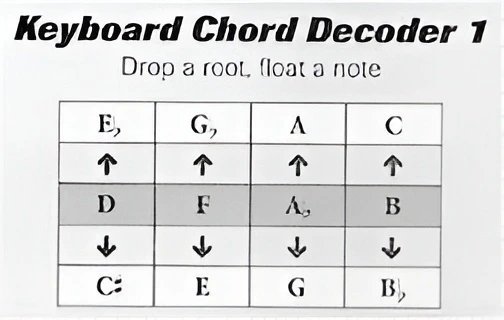
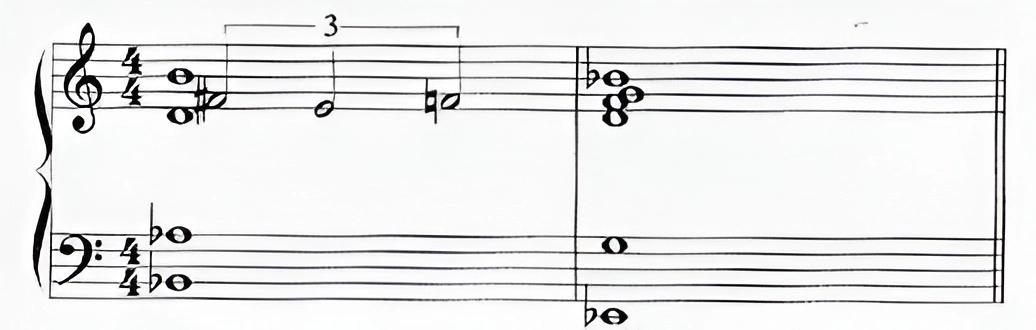
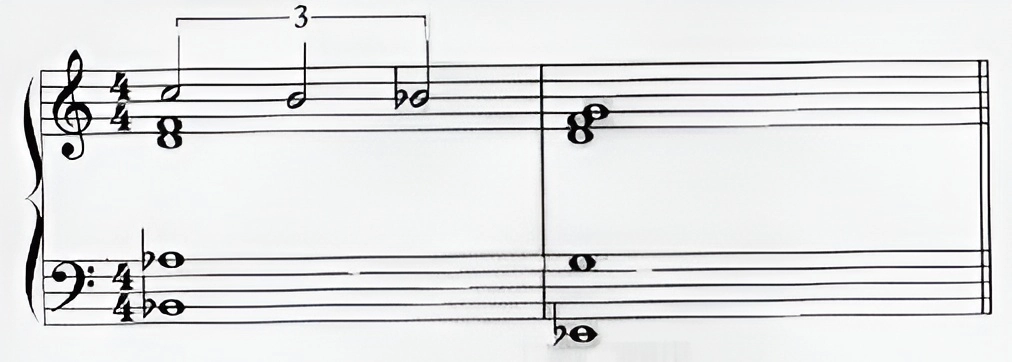
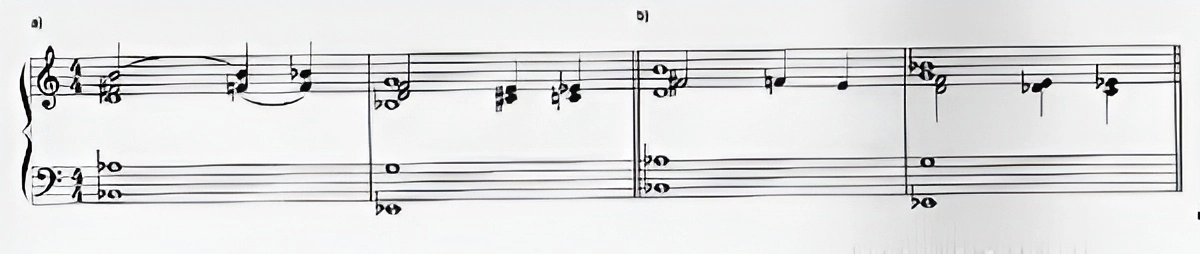
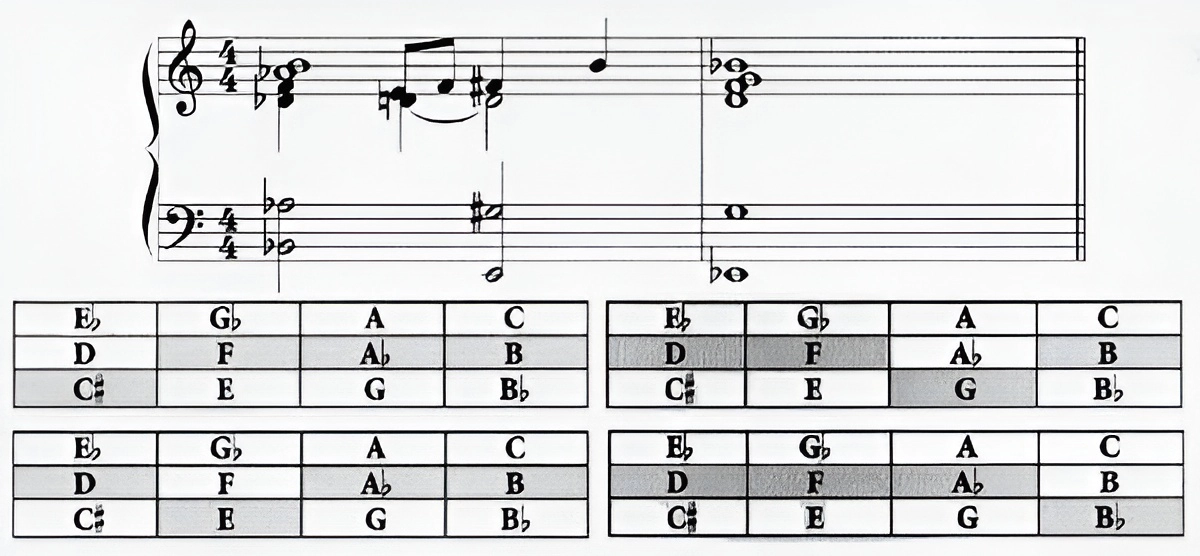
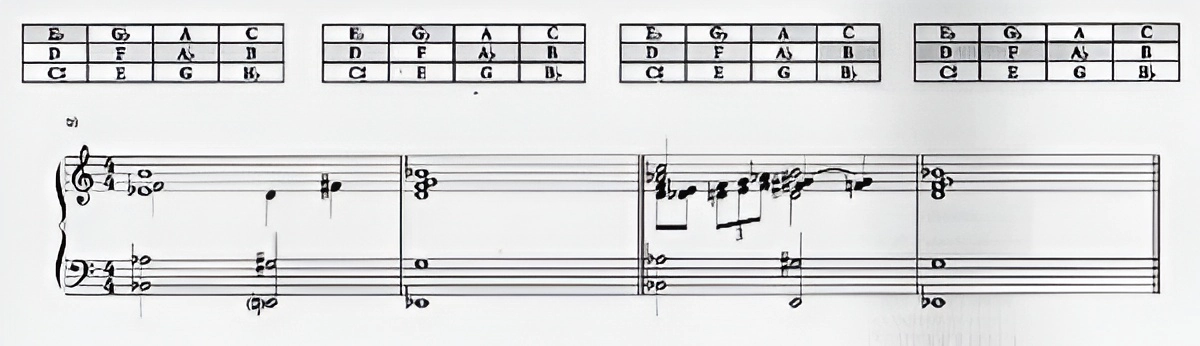
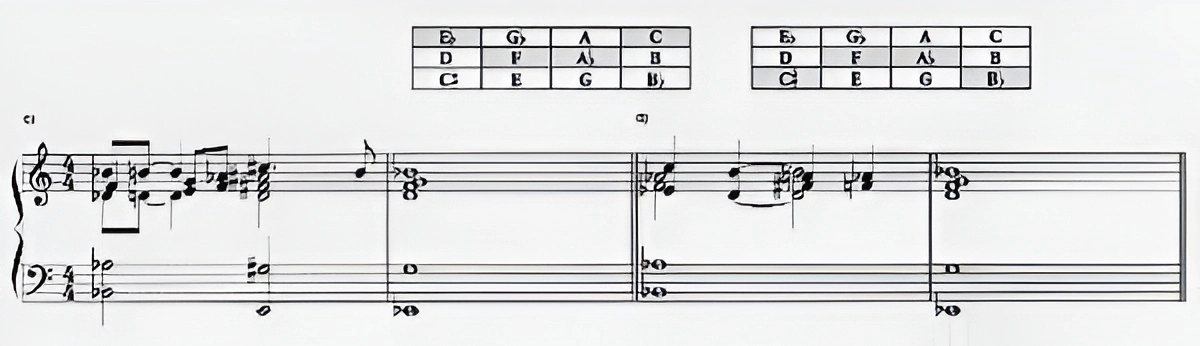
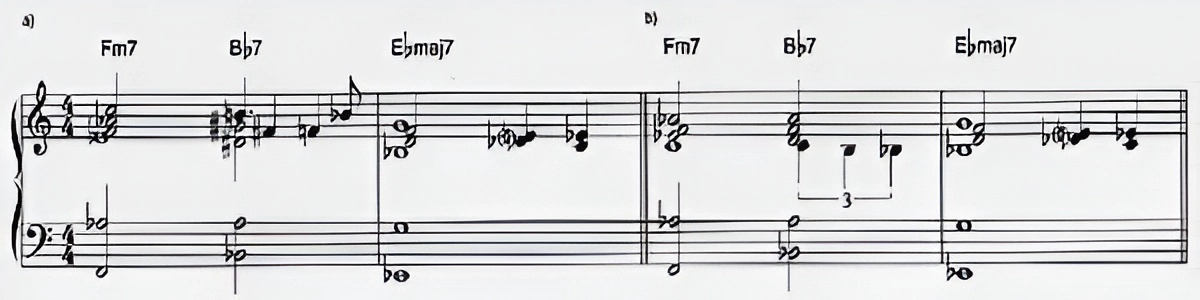
As creative improvisers, we’re thought of as being very free with our approach to music. But a lot of us end up practicing patterns an awful lot, particularly where diminished scales and harmonies are concerned. Not that this is bad; it’s a beneficial and necessary step to take in the mastery of the keyboard.
Where improvisation is concerned, though, we often end up playing what we practice, and knowing your diminished scales doesn’t necessarily lead you to a lot of creative experimentation. Many of us use the diminished scale and chord simply as a sound.
So I’d like to introduce you to a framework for practicing freedom and incorporating it into your playing, in a way that gets very interesting sonic results. The goal is to help you be free with creating voicings and lines, just by starting out with a diminished seventh chord, one of the more utilitarian chords in our bag of tricks. You then alter the sound you’re playing by borrowing from the diminished chord one half-step above or below the one you’ve started with. From there, it’s simply a question of mixing and matching.
Keep in mind that when we mention the min7b5 voicing, you can also think of it as a min6 with the root a third higher; the same goes for min7 voicings, which are maj6 chords with a root a sixth higher; this makes it easier to think of moving the voicings up and down the corresponding maj6 or min6 scale. It’s not as important to think what the new chord is before you play it; just think of reaching up or down to create cool voicings.